What is “White People Sh*t”?
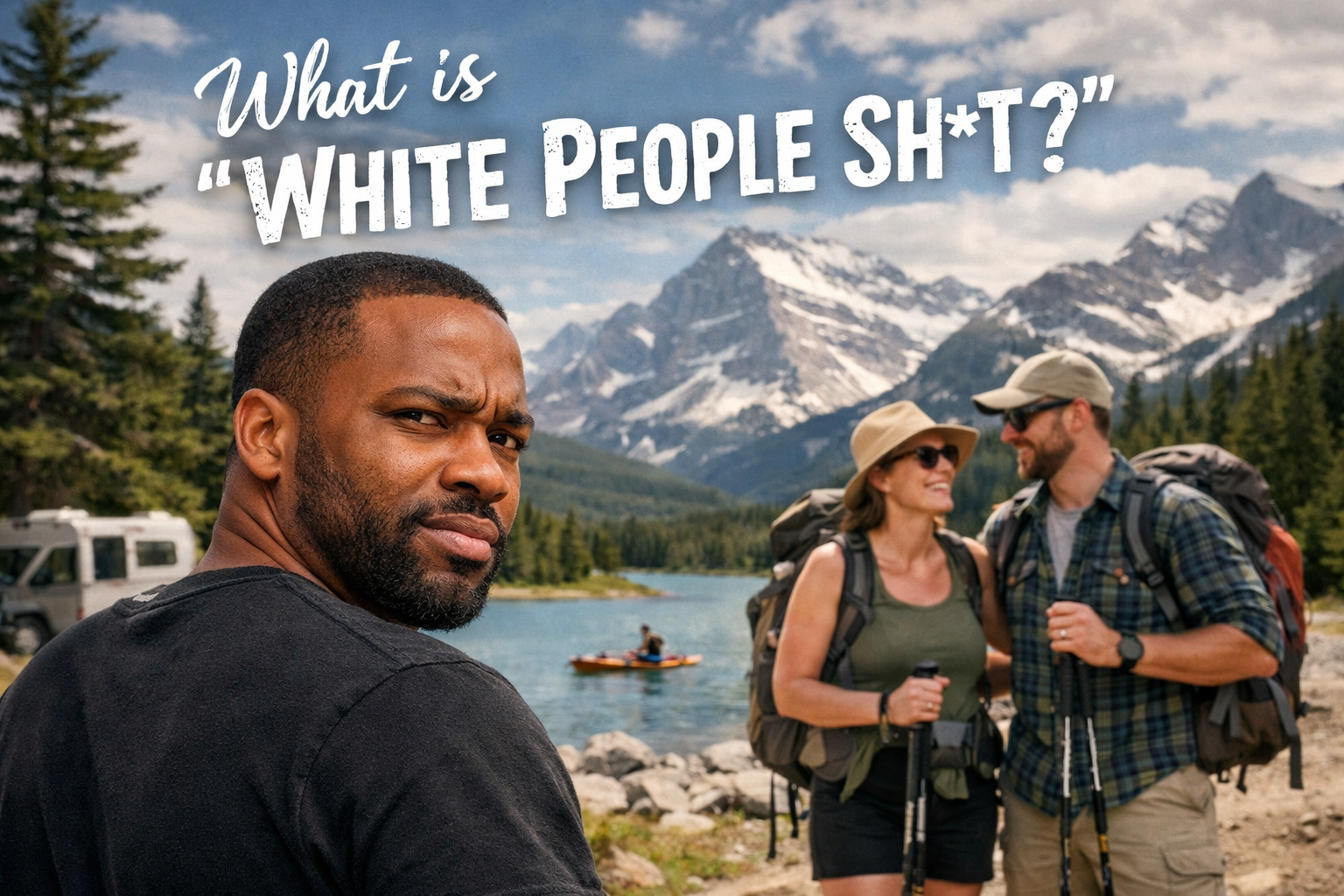
AI Generated Image
Have you ever heard of the term “White People Shit”? If you’re a person of color, you almost certainly know what I mean by this, but if you don’t, here’s a quick summary:
The term white people shit, which is largely used in the black community, is based on the idea that there are certain things or activities that white people do and certain things or activities that black people do. Put differently, there are things that white people do that black people do not. Aside from putting raisins in the potato salad, most of these things have to do with spending time outside. Whether that’s going camping, hiking, skiing, or just going on a run in the city, the medium is not what matters. It’s the space that these activities take place in.
In the summer of 2021, my mom took our family on a trip through Montana, Idaho, and Wyoming—home to some of the country’s most iconic national parks: Yellowstone, Glacier, and Grand Teton. The second she told me where we were headed, I felt it in my body. That buzzing, can’t-sit-still kind of excitement. I went into full prep mode: new hiking boots, a fresh jacket, and a GoPro so I could try to do those landscapes justice.
My sister—who’s never been as “outdoorsy” as me—let out a dramatic groan and said, “Okay… but what are we even supposed to do out there?”
I shot her a look that probably wasn’t my best moment. In my head, I was like: forget the beach—give me mountains, wide-open sky, and wildlife I’ve only seen in documentaries.
So I started telling friends about the trip, expecting that same hype. But when I told some of my Black friends, the reaction wasn’t excitement—it was quiet. Then my friend Xavier laughed and said, “There you go again with that white people shit.”
I didn’t know what to say. Not because I didn’t understand the phrase, but because I didn’t yet understand what it was really pointing at. When I asked him what he meant, he explained it plainly: after everything he’d learned from family about Jim Crow, sundown towns, and the danger Black people have faced in rural parts of this country, he couldn’t imagine choosing to go there—no matter how breathtaking the view might be.
That conversation cracked something open for me. I realized my excitement was built on an invisible assumption: that I could move through those places without carrying their history on my back. What felt expansive and freeing to me could feel heavy—and even threatening—to him. Same landscape, different inheritance.
Afterward, I didn’t know what I was supposed to feel. I grew up outside. I treated nature like a refuge. I never had to ask whether I belonged out there. And it hit me that part of why the outdoors felt so uncomplicated for me was because I hadn’t been raised with the stories that would complicate it. I hadn’t ignored the history—I simply hadn’t been taught to hold it.
That realization stayed with me. We love to talk about the outdoors as if it’s neutral territory—pure, peaceful, open to everyone. But what does it mean to call nature “neutral” when that neutrality depends on which histories we get to forget… and which histories others are forced to remember?
